
StartFragment
He Painted War Planes on Baseball Bats Until 3:30 AM. Then He Had to Rebuild the Whole Company.
Jacob Walter worked from 7:30 in the morning until 3:30 the next morning. He went to bed, got up, and did it again.
This was the run-up to the College World Series, where his company, JAW Bats, sets up a booth every year in Omaha. He'd finished a few days like that in a row when he loaded up and left for the trip. And somewhere on the road it hit him. He was about to work twelve-hour days for ten straight days, talking to tens of thousands of people, on no sleep, in a business that depended entirely on him.
He had a mental breakdown. That's how he describes it, plainly.
It's also how Stu met him. Stu was at that College World Series with his own company, National Parks Baseball Resort, and walked past what he calls the sickest looking booth in the building. He bought a limited edition Bomber fungo bat painted like a war plane. He was supposed to use it. He hung it on the wall. It's too pretty.
A Hobby at 15, a Company at 17, and a Baseball Career That Ended at 150 Pounds
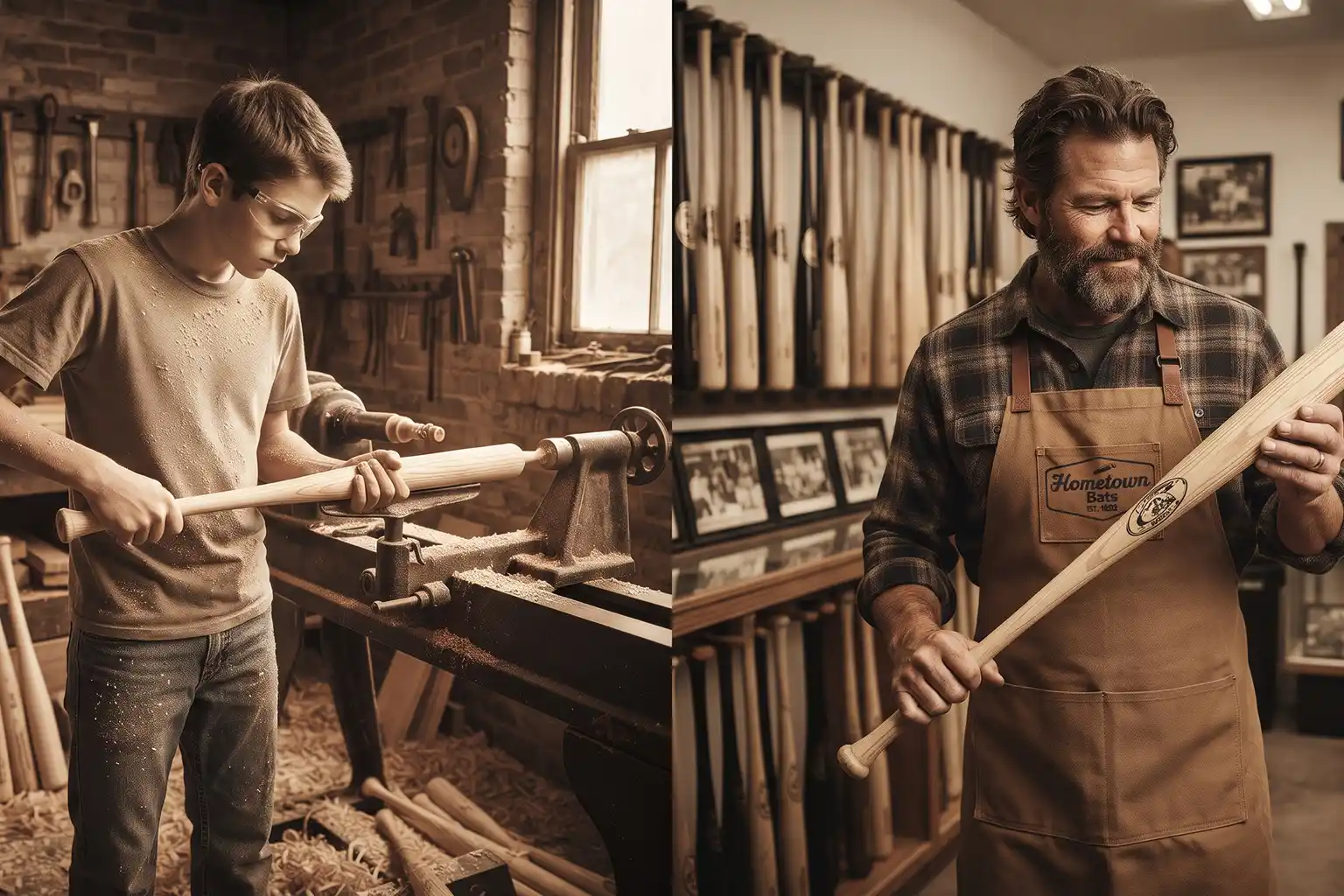
Jacob started making bats at 15 or 16. He loved baseball and he loved woodworking, and the bats let him do both. In 2012 he made it official, going into his sophomore year at a junior college.
He played two years of JuCo ball while filling bat orders on the side. He'd drive home, work on orders, get up early, drive back, and sleep through class. Something had to give. His baseball wasn't going where he wanted. He had a shoulder injury that wouldn't heal, and he was, in his words, 150 pounds soaking wet. Fast and athletic, but he couldn't hit. The writing was on the wall.
So he took a year off and went all in on the bats. And as he puts it, once you take a year off school, it's over. Stu jumped in with a warning for young entrepreneurs: don't take the year off unless you never want to go back.
I'd say the more interesting part is what happened to his relationship with learning. He wasn't a problem solver in real school. Then he got into business and, when he found something he loved, he'd do anything for it. A business book that a teacher assigned would've sat unread. A business book you grab because a part of your company is broken gets read in a weekend. His whole education is trial by fire. He's a baseball player, he says. He learns by failing, so he tries to fail faster.
"Nobody Else Is Doing It. Why Not Us?"
The thing JAW Bats is known for isn't the standard catalog. It's the special requests.
Customers can pick a barrel color, handle color, logo color, and engraving on the website. But Jacob also releases limited editions through the year, and the real action is in the emails and direct messages. People with crazy ideas who are willing to pay a decent amount. He's pretty bad at saying no, he admits, and he's trying to get better.
Those ideas go to creative director Braden Hopper. It's one thing to have an artwork idea. It's another to make it work on a cylinder that's constantly tapering. And the painting itself takes hours and days. This is why it's hard to scale, and Jacob knows it. His take is that sometimes you have to do things that aren't scalable to become scalable, and it's what he's known for now, so they painted themselves into that corner.
Even the big brands are chasing this. Jacob points to Victus, whose bat artist goes by "the bat king" on social media. He and Jacob are friendly. Jacob is a fan, he thinks the feeling goes both ways, and he's still amazed that anyone would call him an inspiration.
His answer to what going to the moon means is an honest one. He says he's a contrarian, which makes it hard to create something people like. But he wanted a product he'd have been proud to swing, and he asks how big they can get while keeping that core.
The Part Where the Garage Stops Working
A garage bat company can be successful. You make a couple thousand bats a year, you have maybe one employee, and you work a lot. Jacob says that works until you hit a threshold. Either you keep growing, or you're done.
The Omaha breakdown was his threshold. After that, he took what he calls the next leap, over the last three years. He brought on partners. He got a new building and new machinery, and he dramatically increased production. New products are coming, including batting gloves, and others he couldn't mention yet.
It's expensive. Employees are extremely expensive. He says the steady increase where you think you're making money and think you're growing isn't reality. To really play this game, he says, you have to spend the money, and he did. It was super scary and still is. For the last two years, the company has been investing so heavily in new products that profit has been thin. And the marketing machine has changed. Everything was social and word of mouth, and that doesn't work like it used to. Now they have to get into paid ads, which costs more money.
Stu named the temptation every owner at this stage faces. You could take an extra $100,000 into your pocket right now. Or you bet on another piece of machinery, an influencer, a paid campaign. If it works, great. If it doesn't, you soul search. Jacob's answer was simple: you bet on yourself. He's always believed in the product. If he hadn't, he'd have been more realistic and probably walked.
He also hired his friends, which people say not to do, and he agrees with them. But nobody has his back more than the people he hired. It creates a weird dynamic, and he feels the weight of their families. He doesn't think you ever get comfortable with that. You get familiar with it.
Build It Like You're Going to Sell It
Stu asked the long-term question: forever business, or a cash exit to a Victus or a Wilson?
Jacob started out thinking it was his forever business, and maybe it still is. He's 33, he's been burned out before, and he still loves it, especially with what's coming. His vision is a legacy brand, bigger than him, with softball in the picture and maybe golf someday. If he's long gone, maybe it's still going. His dad, who retired, now works at the company with him every day.
Stu shared the best piece of advice he got at about Jacob's stage. He grabbed a book called "Walk Away Wealthy" from an airport bookstore on a whim. Its point is that you should always build your business to sell it, not because you plan to, but because you might die tomorrow and your family has to sort things out. Your kid Johnny might have zero interest in taking over. And the book's test is two weeks of vacation in a row. If the business can run without you for two weeks, you can leave. If it breaks, now you know where it depends on you. Fix that, and do it again.
It's the right way to hold a passion business. Love it like you'll keep it forever, and structure it like you'll sell it tomorrow. You'll get the best return either way.
Stu also brought up another founder, Nathan Rucker, who cuts worn baseballs apart with a scalpel and rebuilds them into art, including an American flag made from 100 Chicago Cubs practice balls. Stu's point: not every founder's moon is a mega exit or a $100 million valuation. A lot of the American Dream version is a great life, a good job for other people, and purpose. I agree with him, and I'd add that you only get to choose that on purpose if you've built something you could sell.
A Chartered Jet for a Sandlot Star
The second half of the episode is Stu's marketing playbook, and it opens with a story.
Stu wanted attention from the 13-year-old baseball kids he sells to. He posted a video asking if anyone knew Kevin Costner or Dennis Quaid. Someone connected him to a woman in the film industry. She told him something that changed his plan. Better than Kevin Costner, she said, because 13-year-olds don't know Kevin. They know Patrick Renna from The Sandlot, the great Ham Porter, who has more than six million followers.
Renna was making a show called Dugout Dads, and the sponsorship price was too high for Stu's stage. Hershey's and Wonder Bread were already sponsors. So Stu got creative. He offered to sponsor all nine episodes, as the last name in the credits, with one more ask: come see National Parks Baseball Resort.
Renna agreed. Stu then built a trip so special that Pat left a friend, not a transaction. They visited the Sandlot filming location near Salt Lake City. They had lunch at a restaurant decorated like the movie, and Stu invited high-net-worth people who wanted to meet Pat. A ten-time American Ninja Warrior who owns the world's largest ninja park got around 300 people to come meet him. The next morning, Stu chartered a private jet from Salt Lake to Idaho Falls, where Pat sat in the co-pilot seat for one leg. At Stu's house, with its backyard baseball field, Pat taught Stu's 13-year-old team how to make s'mores, on film.
Stu calls it a stupid-size investment that most founders can't justify, and he's honest that it's still hard to justify when you've taken investor money. The deal included a video where Pat's fictional team, the Rainbow Unicorns, invites real teams to come play them at the resort. Stu will use that video over and over.
Don't copy the jet. Copy the thinking. Pick the hero your customer actually knows, and give that person an experience instead of an ask.
Be the Purple Cow, and Never Stop Saying It
Jacob admitted he understands marketing okay but isn't creative in that way. Stu says everyone struggles with that, and he'd asked his whole team to read "Purple Cow" by Seth Godin. His advice for a brand like JAW Bats:
Invite influencers to tour the facility and pay their way. Even if it takes 7 or 8 bats to cover flights, the personal connection is worth it, especially when you give them a custom bat and an easy way to make content. Send the CEO of Wilson a bat, with a note saying you've admired them on LinkedIn. And keep making the booth at Omaha so memorable that every other exhibitor leaves telling friends to get a JAW bat.
Then he told the Qualtrics story. Ryan Smith sold the company to SAP for $8 billion, and on an SAP investor call, one investor said he'd never heard of Qualtrics. Eight billion dollars, and the investors hadn't heard of it. Stu's conclusion: you can never do too much to get your brand out there. Keep saying the same thing, everywhere, until you're sick of it.
What Stuck With Me
This isn't the typical founder story with a cliff-edge moment. Jacob is 33 and he's still in the middle of it, still scared, still putting more in than he's taking out. He's honest about that. Two years of heavy reinvestment, a business that outgrew its garage, a bet on a product line he can't talk about yet.
What I trust is that he found the limit in his own body. A founder who breaks down at three in the morning before the biggest event of the year and then restructures the company is a founder who listened. He didn't just push through. Most people would have pushed through.
He wanted to make a bat he'd have been proud to swing. He's now figuring out how to make a lot more of them without losing that. It's a good bet. And at 33, he can afford to find out.
Recorded for the Startups with Stu podcast. More at startupswithstu.com.
EndFragment
Related blogs


Subscribe for Updates
Subscribe to the Startups With Stu newsletter and get advice and stories sent straight to your inbox to help launch your business to the moon!
Comments